
RCC emphasizes workforce readiness, regional partnerships at annual President’s Advisory Council event
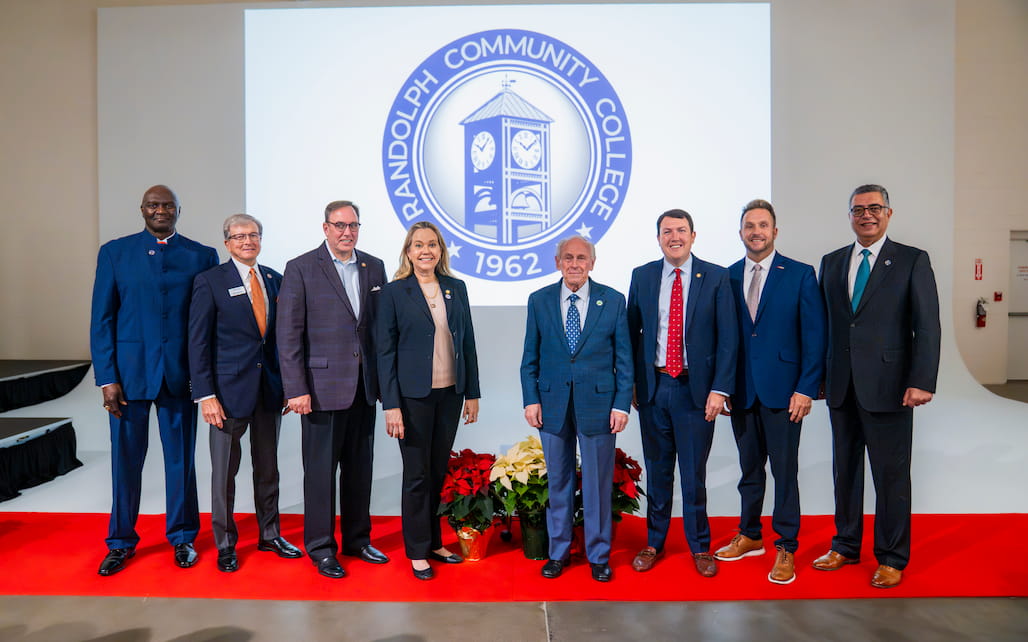
Randolph Community College (RCC) reinforced its commitment to expanding educational opportunities, strengthening industry partnerships, and preparing Randolph County’s workforce for the future during its annual President’s Advisory Council and Legislator Appreciation Breakfast on Friday, Nov. 20.
Held in the Photographic Technology Building on the Asheboro Campus, the event brought together approximately 120 elected officials, business executives, and community leaders to recognize the partnerships driving the College’s success and discuss priorities for regional economic growth.
The program began with a welcome from RCC Board of Trustees Chair Chris Yow and an invocation by Board Vice Chair Alvin Battle.
RCC President/CEO Dr. Shah Ardalan then outlined the College’s strategic vision through 2030, emphasizing the importance of reaching students earlier, connecting education to meaningful career opportunities, and responding to the evolving needs of local industries. He also highlighted the College’s role in supporting displaced workers while preparing talent for new and expanding industries.
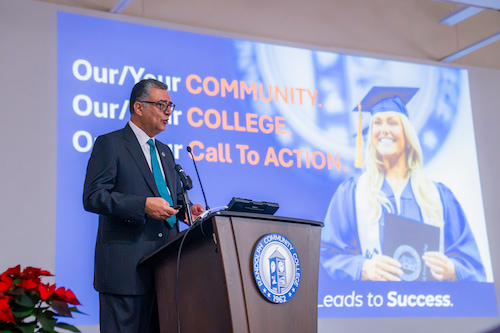
“Our responsibility is not simply to provide education or award credentials, but to ensure that every student has the skills, confidence, and opportunities to succeed beyond RCC,” Ardalan said. “As Randolph County continues to grow and diversify, we must work together to build a workforce that meets the needs of today's employers while anticipating the opportunities of tomorrow. That is how we strengthen our economy and create lasting prosperity for our community.”
Ardalan also discussed two major initiatives designed to expand RCC’s workforce training capacity: The $10 million Applied Industrial AI Center of North Carolina (Ai2C-NC), which is funded and moving toward construction, and the proposed RCC Liberty Education and Workforce Training Center, for which the College is working to raise $30 million. The projects would expand training opportunities in healthcare, advanced manufacturing, and skilled trades while integrating practical AI applications into workforce education.
State legislators reinforced the importance of investing in community colleges to sustain North Carolina’s economic competitiveness.
N.C. Rep. Brian Biggs highlighted RCC’s long-standing commitment to preparing students for successful careers, pointing to dual enrollment, apprenticeships, and workforce training as pathways to economic opportunity.
“That's a pipeline that starts in our schools and runs through this campus and ends in good jobs right here today,” Biggs said. “My commitment here today in Raleigh is to continue to support RCC.”
N.C. Sen. Dave Craven pointed to state investments in workforce training and the community college system, noting the importance of aligning education with industries driving economic growth.
“We’ve made historic investments in community colleges, and we put $200 million into the system to do things like Propel NC, which RCC is at the forefront of, making sure that we have workforce trained for what we need today, and so I think that is a critical piece,” Craven said.
N.C. Sen. Amy Galey emphasized the College’s contributions to healthcare education and the broader benefits of preparing qualified professionals to serve their communities.
“The community college system, especially in Randolph County, has really served a vital role in decreasing costs because as we produce more healthcare workers, the increase in the labor pool means that the cost of receiving care goes down for the patient,” Galey said.
N.C. Rep. Neal Jackson underscored the value of community partnerships and expressed appreciation for RCC’s impact on generations of Randolph County families, including his own.
“I'm so thankful for this institution because my life was changed by this institution before I was ever born. My two parents went here, and it showed them what they could do,” Jackson said.
Randolph County Commissioners Chair Darrell Frye echoed the importance of collaboration, highlighting the County's recent $3 million investment in RCC and the role of strong relationships in supporting education, economic development, and community services.
“Relationships are everything,” Frye said. “Relationships that we have with the previous presenters that you've heard this morning, the relationship that we have with the collection of folks all through this room this morning has meant everything to this county, and especially to me personally.”
The event underscored RCC’s continued commitment to working alongside elected officials, employers, and community organizations to expand access to education and strengthen Randolph County's economic future.
###
About Randolph Community College: Randolph Community College (RCC), under the leadership of President/CEO Dr. Shah Ardalan, is committed to providing relevant career training and educational opportunities. Ranked No. 1 in North Carolina by Niche.com, the College offers affordable degrees and short-term certificate programs that start throughout the year, both in person and online. To register, visit randolph.edu/register or call 336-633-0200 and expect to engage with the most competent and compassionate team of faculty and staff.